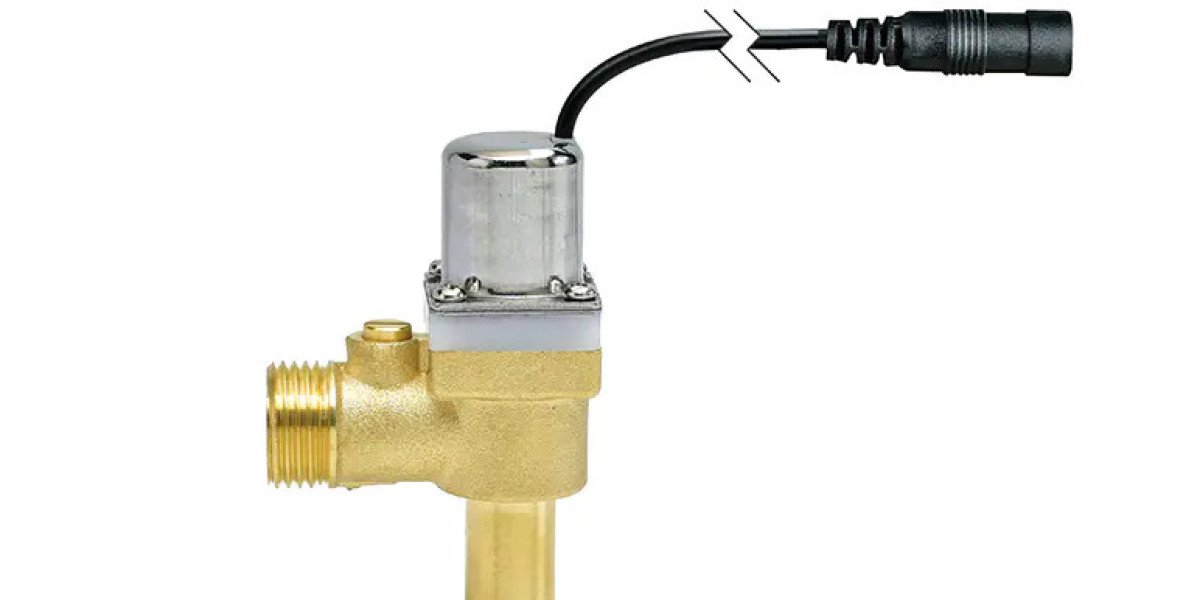

Water control has quietly become more refined as living standards and infrastructure expectations continue to evolve. From residential bathrooms to outdoor irrigation layouts, automation is no longer treated as an optional upgrade. In many of these scenarios, the Sanitary Ware Solenoid Valve and the Garden Solenoid Valve play a practical role by helping systems regulate water flow with consistency, safety, and responsiveness. Although they are often hidden behind panels or underground pipelines, their influence on everyday water usage is substantial.
A solenoid valve operates through an electromagnetic mechanism that converts electrical signals into mechanical motion. This simple yet effective principle allows water flow to be started, stopped, or redirected without manual intervention. In sanitary ware systems, such valves are commonly integrated into smart toilets, sensor faucets, shower control modules, and water-saving flush systems. The focus here is not speed or force, but controlled precision. Stable opening and closing behavior helps reduce water waste while supporting hygiene-focused designs that minimize direct contact.
Within sanitary environments, material selection and internal structure matter just as much as responsiveness. A Sanitary Ware Solenoid Valve typically relies on corrosion-resistant metals or reinforced engineering plastics, combined with seals designed for frequent operation. These components help maintain stable performance under varying water pressures and temperature changes commonly found in domestic or commercial restrooms. Rather than emphasizing power, these valves prioritize predictable flow control, quiet operation, and compatibility with compact installations.
Outdoor water systems introduce a different set of conditions. A Garden Solenoid Valve often needs to handle exposure to sunlight, soil moisture, and fluctuating temperatures. Irrigation systems depend on scheduled and zoned watering, which means valves may open and close multiple times each day during growing seasons. Durability in this context is not about resisting extreme force, but about maintaining consistent sealing and signal response over long operating cycles.
One noticeable advantage of garden solenoid valves is their adaptability to automated controllers. Whether connected to a basic timer or a smart irrigation system that responds to soil moisture data, the valve becomes a key execution component. When the controller sends a signal, the valve responds immediately, allowing water to flow only where and when it is needed. This targeted approach supports efficient watering habits without demanding constant supervision from the user.
The contrast between sanitary ware and garden applications highlights how solenoid valves adjust to different priorities. Indoors, water control often revolves around hygiene, comfort, and space efficiency. Outdoors, the focus shifts toward environmental exposure, operational stability, and system scalability. Despite these differences, the underlying mechanism remains similar, showing how one technology can serve multiple environments when properly adapted.
Another practical consideration involves installation and maintenance. Both sanitary ware and garden solenoid valves are usually designed with standardized interfaces, making them compatible with common piping systems. This reduces installation complexity and allows replacements or upgrades without extensive system redesign. Maintenance routines also benefit from modular construction, as worn seals or coils can often be serviced independently rather than replacing the entire valve.
As water conservation discussions continue across residential and commercial sectors, solenoid valves are increasingly viewed as enabling components rather than background hardware. Their role in regulating flow helps reduce unnecessary water usage while supporting automated control strategies. In sanitary ware systems, this often translates into more precise flushing or timed water release. In garden irrigation, it allows watering schedules to align with plant needs rather than fixed routines.